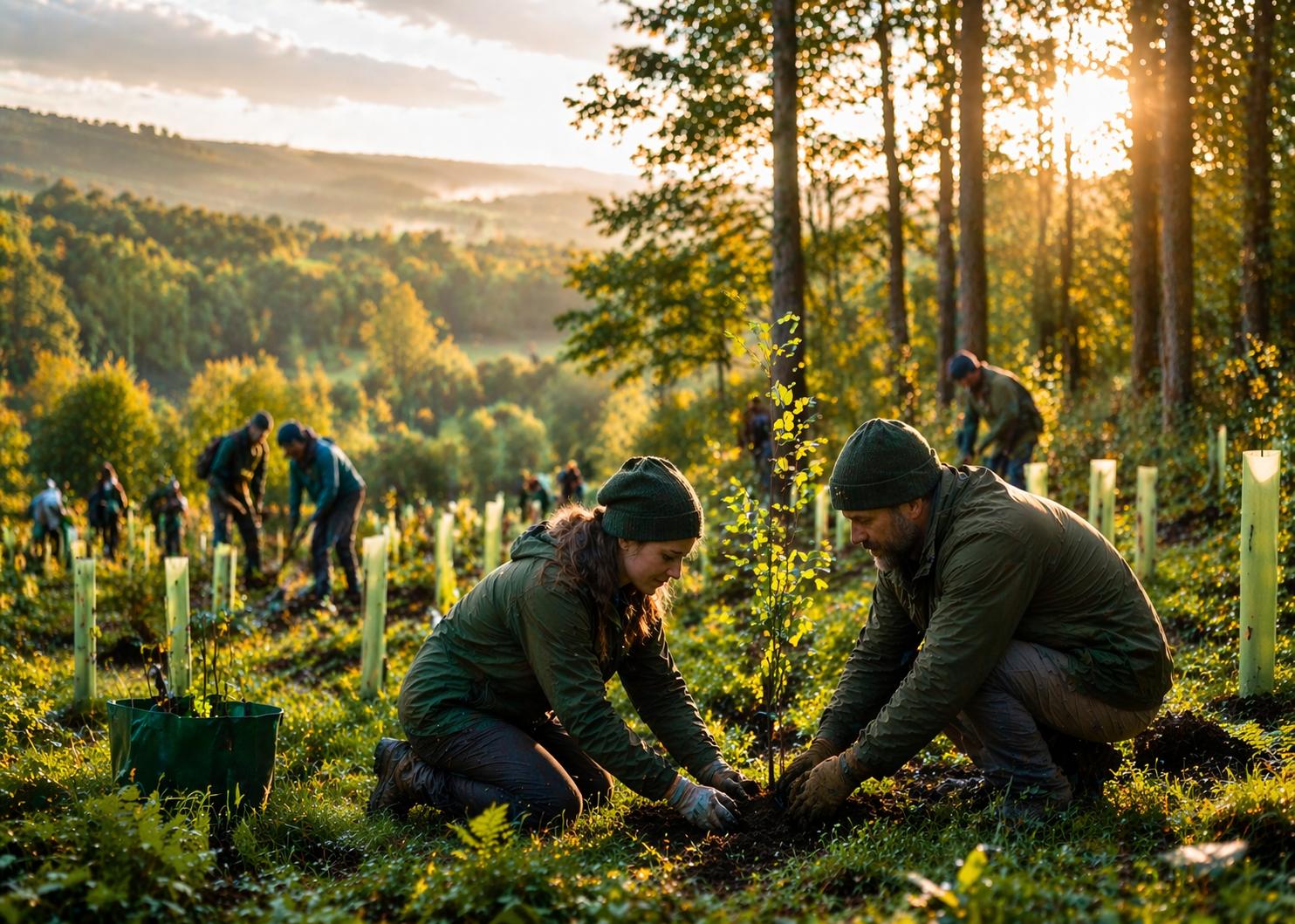
The Wildlife Trusts has marked 100 years of conservation work with a new woodland restoration project linked to its centenary. The network, made up of 47 independent charities, manages more than 2,600 nature reserves across the United Kingdom. Its latest step focuses on the purchase of farmland that will be restored as Norton Wood, shifting land use from agriculture back to a natural woodland setting.
The site has been shaped by years of intensive farming, leaving soil quality reduced and biodiversity limited. The restoration effort aims to reverse that pattern through gradual reintroduction of native trees, plants, and wildlife habitats. Early work will focus on improving soil health and creating conditions that support long term ecological recovery. Over time, the area is expected to develop into a mixed woodland that can sustain a wider range of species.
The project also connects environmental work with local engagement. Nearby communities will have access to the site through guided activities, volunteer programs, and educational visits. Schools and local groups are expected to take part in planting and monitoring, offering a closer link to how landscapes change over time. The approach reflects an effort to make conservation visible and accessible rather than distant.
Woodland restoration plays a role in climate resilience by supporting carbon storage and reducing the impact of extreme weather. Trees and restored habitats help manage water flow, improve air quality, and provide shelter for wildlife. The Norton Wood project brings these elements together in a single site, combining ecological repair with public involvement.
After a century of conservation work, the Wildlife Trusts continue to focus on practical changes to land and habitat. This project reflects that direction, with attention on long term recovery and steady engagement with the communities around it.